Showing posts with label Art Deco. Show all posts

Monday, April 9, 2012

Snapshots, Richmond

I like the light on days like today when one minute it is is raining horizontally and the next the sun comes out, photos from my late afternoon wander though West Richmond.

Modern houses in Richmond, quite a lot of this cheek-by-jowl with nineteenth-century terraces and weatherboards, some really good and some a bit average, this isn't my favourite but it looked good in the sun.


Red brick corner shop.


Back of the 'All Nations Hotel' on Lennox St.


Terrace Houses on York St.


Art Deco 'Davis Relova Laundry' , building designed by Walter Mason, apparently it was converted to apartments several years ago, more here. Facade is looking a bit shabby

Tuesday, November 2, 2010

Snapshot East Melbourne


I posted this on Walking Melbourne and ended up writing some thoughts about what style it is and I thought I would re-post them here. It is an interesting little building, quite different to most of the 1930s apartment blocks in East Melbourne.
Called Bradoc House it was built in 1933 and is on George St between Simpson St and Hoddle St.


The info from the East Melbourne Historical Society http://emhs.org.au/history/buildings/ea ... adoc_house says it is Tudor-Byzantine with Spanish influence, but well, that just sounds a bit silly to me. I guess the white and dark colours is a bit Tudor, but is is also Spanish Colonial. I have no idea why Byzantine, I guess maybe the tower could be and the way the forms are massed together, and it has some hints at crenelations, but once again this all could come from a Spanish colonial influence as well. If anything it makes me think more of Romanesque style than Byzantine. Personally rather than Tudor-Byzantine I would say it has Spanish Colonial and Arts and Crafts influences. I don't think there are really hard and fast descriptions for 20th century architectural styles, especially in periods that experimented with a lot of revival styles. What do others think?

Tuesday, October 19, 2010

Snapshot Adelaide - Colonial Mutual Life Building

I have quite a few photos from Adelaide to post. It has a pretty amazing array of older buildings from the classically inspired galleries and libraries on the North Terrace to small bluestone houses. The most noticeable and celebrated buildings tend to be nineteenth century, however, I found a large number of twentieth century buildings that also caught my eye.

This is the Colonial Mutual Life building on  King William St. It was apparently built in 1934 and became the city's tallest building until 1969. In a relatively low rise city like Adelaide it still towers above many buildings. I'm not sure exactly what you would call the style, I have seen it referred to as neo gothic, and certainly you can see the paired arched windows with delicate columns that are taken directly from gothic architecture. It has a relatively minimalistic use of decoration in comparison to most buildings that I would think of as neo gothic. Perhaps neo gothic filtered through the more streamlined aesthetic of art deco? The small columns look like twisted columns from a distance, but up close you can see that they are actually decorated with a very art deco zigzag pattern. The capitals are also very art deco, with the usual gothic style flowers or leaves reduced to simply geometric shapes and lines. 

The building appeared to be empty, though apparently it does have heritage protection (and hopefully that counts for more in Adelaide than it sometimes does in Melbourne!) This site suggests there were plans for it to become a hotel, but it also says that it will be completed by 2009 and it clearly isn't.


Some close up details of the delicate decoration, which does get a little lost in the mass of of the very large facade.


Friday, January 15, 2010

Demolition has begun on Lonsdale House and Caldeonian Lane


I was deeply saddened yesterday to walk past Caledonian Lane and find it blocked off. Pieces were being hacked off the buildings in Caledonian Lane. For now the façade of Lonsdale House is intact but for how long I don't know. Sources suggest that scaffolding will soon be erected.


A protest is planned for tonight at 6pm.

The demolition of Lonsdale House and Caledonian Lane has begun.

Protest this evening (Friday 15th January) at 6pm.

Come to Lonsdale House this evening and show your anger at Myer, the State Government and the City of Melbourne for allowing the destruction of our architectural heritage.

Please bring friends and pass this message along, we need as many people as possible.

Thursday, December 3, 2009

Another piece of Melbourne Art Deco bites the dust...


Sad to see this warehouse on the corner of Brunswick St and Victoria Pde seems to be in the process of being demolished. Scaffolding went up on Monday and it is already half gone. The lovely spire is till there... for now.


It's a real shame to lose this, I can only imagine something pretty uninspiring will take its place. It had been left to get so run down but it still had a beauty about it, the peeling white and pink paint, the ripped posters, the rippled patterns down the side, the faded traces of its former functions, the great hulking, yet elegant tower.


I actually bought my first proper grown up bike from here when I was about 14. It also has historic significance as one of the old Cable Tramway Engine Houses. I found this photo of it by J.T. Collins in the State Library Picture catalogue from 1975. You can see some art deco style lettering that read 'Penfolds House Wines'.


John T. Collins, 1975. Image from the State Library Acc. No.:Accession No: H96.210/120


Some recent photos pre-scaffolding.


Friday, August 14, 2009

Snapshot, Melbourne University.

The chemistry building at Melbourne University. Built in 1938 by the Victorian Public Works Department. Don't know who the architect was I'm afraid.

Tuesday, December 2, 2008

Snapshot, Melbourne.

The Century Building, designed by Marcus Barlow, 1938-1940.
Covered in Wunderlich Granitex tiles.

Tuesday, October 28, 2008

I was reading The Guardian online and found this feature on 1000 artworks to see before you die.

Photobucket

It is quite fun, but strangely it doesn't tell you where the images are kept, maybe they think seeing them in some form is enough. Not really though, flicking through the latest selection of 21 there are some many problems.
First is size, no difference on screen between a William Blake water colour and a Botticelli. You lose the intimacy of seeing a tiny image, or the impressive size of a huge canvas. In addition you can't see the textures or the material, the screen flattens everything out.
Context, most of these are from art galleries, but nevertheless context still matters. They do have Stonehenge up there and surely that is a completely spatial experience, no one would say they had seen it if they hadn't been there. Hmm.
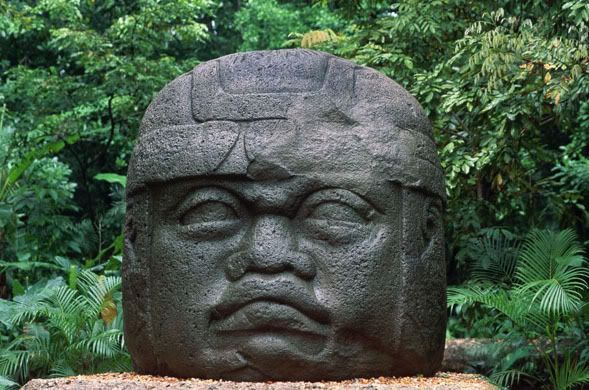
What else? I don't like some of the one liners such as reducing the Canova pictured above to the phrase "Three little simpletons." Urgh. Makes me want to slap someone. Surely then this

Could be "big fat head in bush."

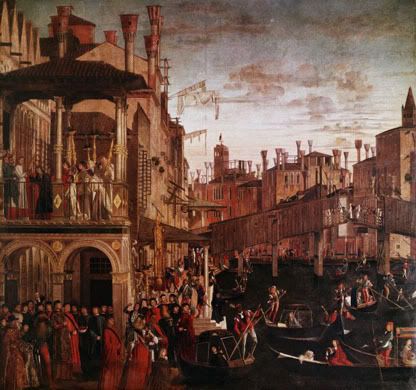
And this:
Is described as "The tubular chimneys of Venice with their strange terracotta spouts ... " Um. Thrilling.

Le sigh. Predictably modern artists and popular artists like Caravaggio get off better, as timeless expressions of human emotion and the like. So maybe it is 100o art cliches to read before you die.

Anyway it is still fun to go through and tick off. I got 8 out of 21.

Edit to add they do have the locations, click here.

Saturday, October 11, 2008

Saturday, September 13, 2008

Spring in East Melbourne

I took a spring walk around East Melbourne this morning.

First I cut across the Eastern Side of the Fitzroy Gardens.


A square tempietto (small temple) or 'The Old Bandstand' as it is usually described, is a beautiful sculptural form. You can see that on the side facing me there are two pilasters with a sort of Egyptian inspired capital, on the entrance side the columns are free standing. I often see weddings here, though on my return through the park it was being used as a stage for some boxing practice. I love architectural features in gardens, but they seemed to have died out in the last 100 years in favour of sculpture. It is architecture simply for architecture's sake, for the enjoyment of looking at columns and capitals. Unlike a sculpture it can often be entered into, an experience which can change the way you see the space. For instance you can stand and look at the garden framed by the columns, actually I should have taken a photo of that! It can also be an expression of architectural creativity, without the constraints of function.

Next are the sculptures that adorn the Eastern entrance on Hotham St. These were designed by William Leslie Bowles, who also designed the statue of Diana and the Hounds which stands outside the Conservatory. The sculptures, creatively titled 'Mermaid and Fish' and 'Boy and Pelican', won the sculpture competition held in the gardens in 1935. I think it is a wonderful time to look at sandstone sculpture, when the sun falls upon it it almost shines deep ochre which is set off against the green of trees and grass and the blue sky that has finally returned to Melbourne.
The statues exhibit the streamlined classicism typical of Melbourne Art Deco.


Art Deco Apartments on on Powlett St. I don't know much about these apartments construction but I would guess a date in the 1930s. Two buildings curve to meet in the middle and create a semi-circlular garden area. The brickwork is delicate, not the way slightly darker brick on the entrance tower which give the pattern a rhythm and make it stand out from the main wing.
I also like the pared back classicism of the entranceway. With so many wonderful examples of apartments in Melbourne it upsets me that most modern ones are so atrocious. Not only is their appearance dull and uninspired but they lack good design. Here are a set of apartment which give an outlook onto a garden, most apartment must have windows on both sides so have good light and so on. My modern apartment rant must wait till another day.


Finally some blossoms on Hotham St. The wisteria (below) will be around for a while, but I though I should capture some cherry blossoms before the spring winds toss them away.


Thursday, May 29, 2008

Architecture of Flinders Lane.

I often think of this as the 'art deco' lane, but it is much more of a mixture of styles. Unsurprising in any city. From Spring to Swanston..


A view of 'Milton House' a small building with art nouveau detail. As you enter Flinders Lane one is immediately struck by the presence of several tall skyscrapers. This one that towers over Milton House is simple, but at the same time it is exemplifies what I find beautiful about the skyscraper. Its simple glass facade becomes a mirror for the surrounding environment, other buildings, sunlight and clouds play across the surface. It reminds me of a phrase common to landscape design, the idea of 'borrowed landscape', when a garden, by virtue of its position, may borrow a scene of a distant mountain or the like, which adds to the garden experience. The skyscraper has instead a 'borrowed facade'


'Duckboard House' has recently been renovated and an extra storey has been added. I haven't been inside, but I rather like the effect of the addition. The simple square and vertical emphasis of the original structure, which must date to the 1930s, are in contrast to the curves of the new upper storey. Yet the contrast of curves and straight lines is not at all alien to art deco, though the asymmetry of the addition perhaps is.

I read a review somewhere talking of how the renovation has 'destroyed' another building. But i really don't think it has. If we want buildings in the CBD of a city to survive they have to be able to be adapted to new uses, which will always necessitate alterations. In this case the extension seems to have been inspired by the building, but it also responds to more contemporary trends in architecture.

I do wonder what the interior was like and what it now is like.

Some background info can be found here.


Signs. Melbourne does signs well.

Architectural detail. Foliage, swirls, bricks. Perhaps more squate than some of my favourite examples but very satisfying nonetheless. Not sure about the history of this building, will investigate.

Hit Counter